We visited Bath during our week-long trip through England to celebrate my Mom’s birthday. It was the starting point before we headed off to the Cotswolds and it was such a great way to kick off our time there!
If you’re putting together a UK itinerary and wondering whether Bath is worth the stop, this guide is our answer: yes!
Getting to Bath & Getting Around
Trains from London Paddington run frequently to Bath Spa Station and take around 1.5 hours. A standard return typically costs £25–45 if you book ahead online. National Express busses from London Victoria and both Heathrow and Gatwick airports are cheaper (sometimes under £15 each way) but take longer. Driving from London takes 2.5–3 hours depending on traffic. Since our plan was to road trip, we opted for this but will warn you that the city center roads in Bath can get congested and be challenging to navigate.
Once you’re in Bath, you’ll want to plan to walk everywhere. The city center is compact and almost everything on this list is within 20–30 minutes of everything else. The one caveat: bring proper shoes. Bath is built on Roman roads & hills.
A Quick History
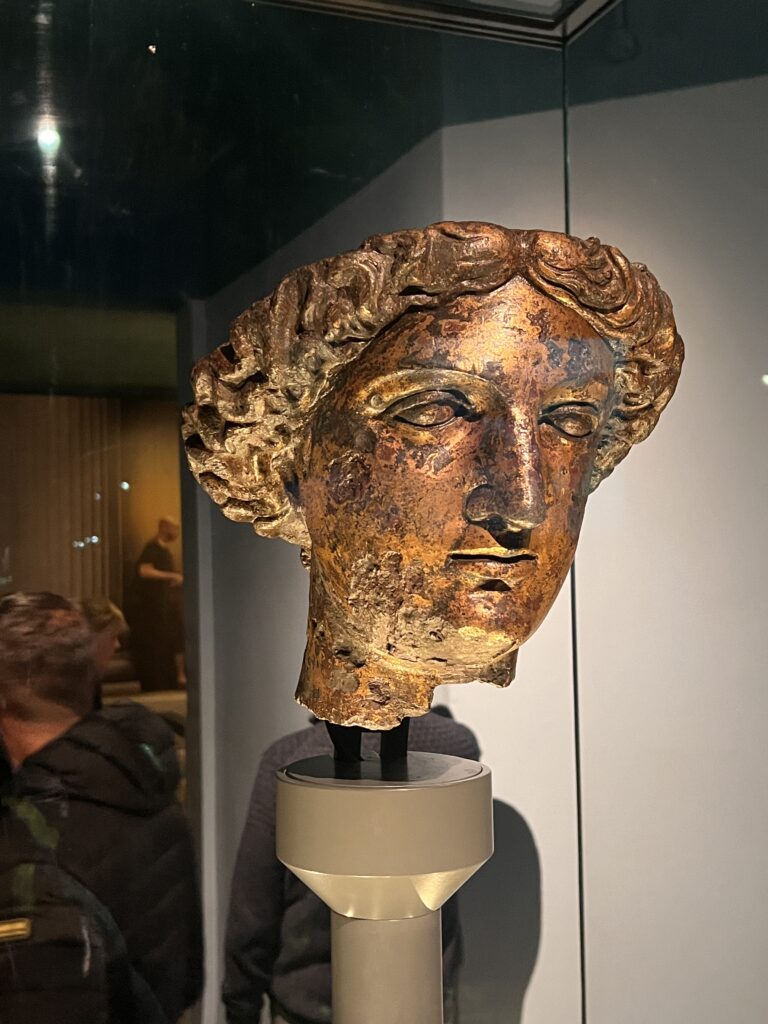
Bath’s story starts in 60 AD when the Romans built a bathing complex around the area’s natural hot springs, calling the settlement Aquae Sulis, after the local Celtic goddess. They ran it for nearly 400 years. The baths fell into disrepair after the Romans left, and Bath stayed relatively quiet through the medieval period.
The city’s second great era came in the 18th century, when Georgian high society essentially adopted it as a seasonal playground. The wealthy came to “take the waters” (believed to cure gout, joint pain, and various other ailments), attend balls at the Assembly Rooms, and parade around in their finest. Developers John Wood and his son built some of Bath’s grandest buildings (the Royal Crescent & Circus to name a few), all from that distinctive warm-toned Bath stone limestone that makes the whole city glow.
Jane Austen lived here from 1801 to 1806 and, famously, didn’t love it. She wrote to her sister Cassandra about her “happy feelings of escape” when the family finally moved on. Regardless, Bath gave her the material for two novels (Northanger Abbey and Persuasion), and the city has been trading on that connection ever since. More recently, Bridgerton’s production team discovered that Bath looks like Regency London and used it as the backdrop for the popular Netflix series.
The Roman Baths
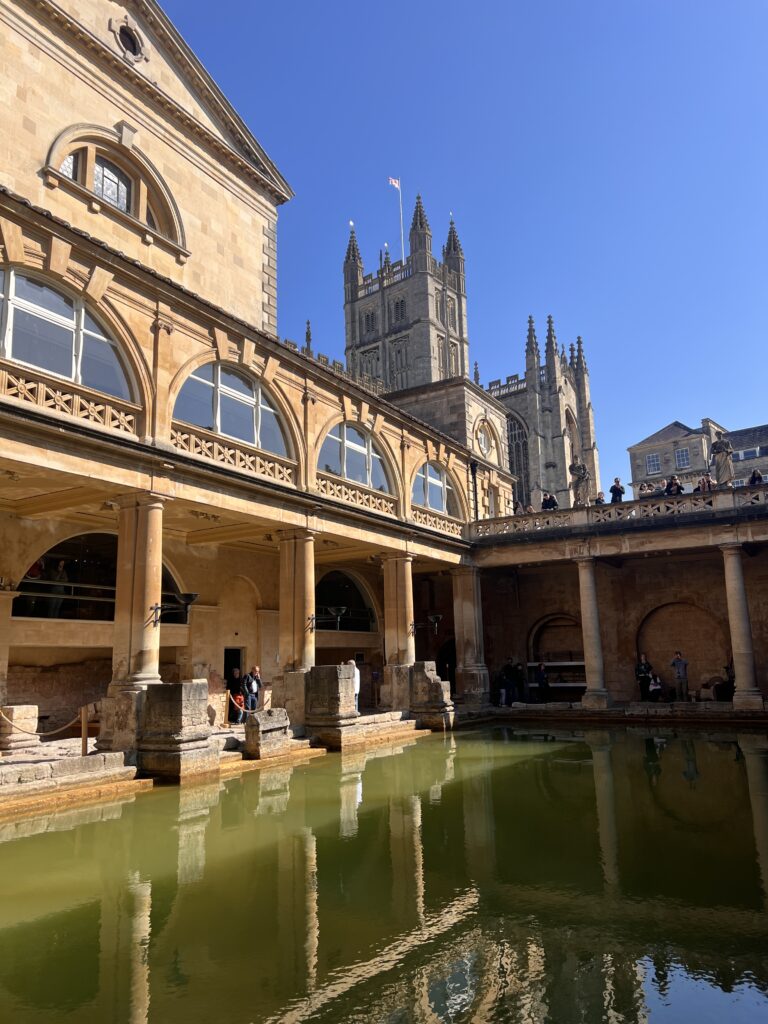
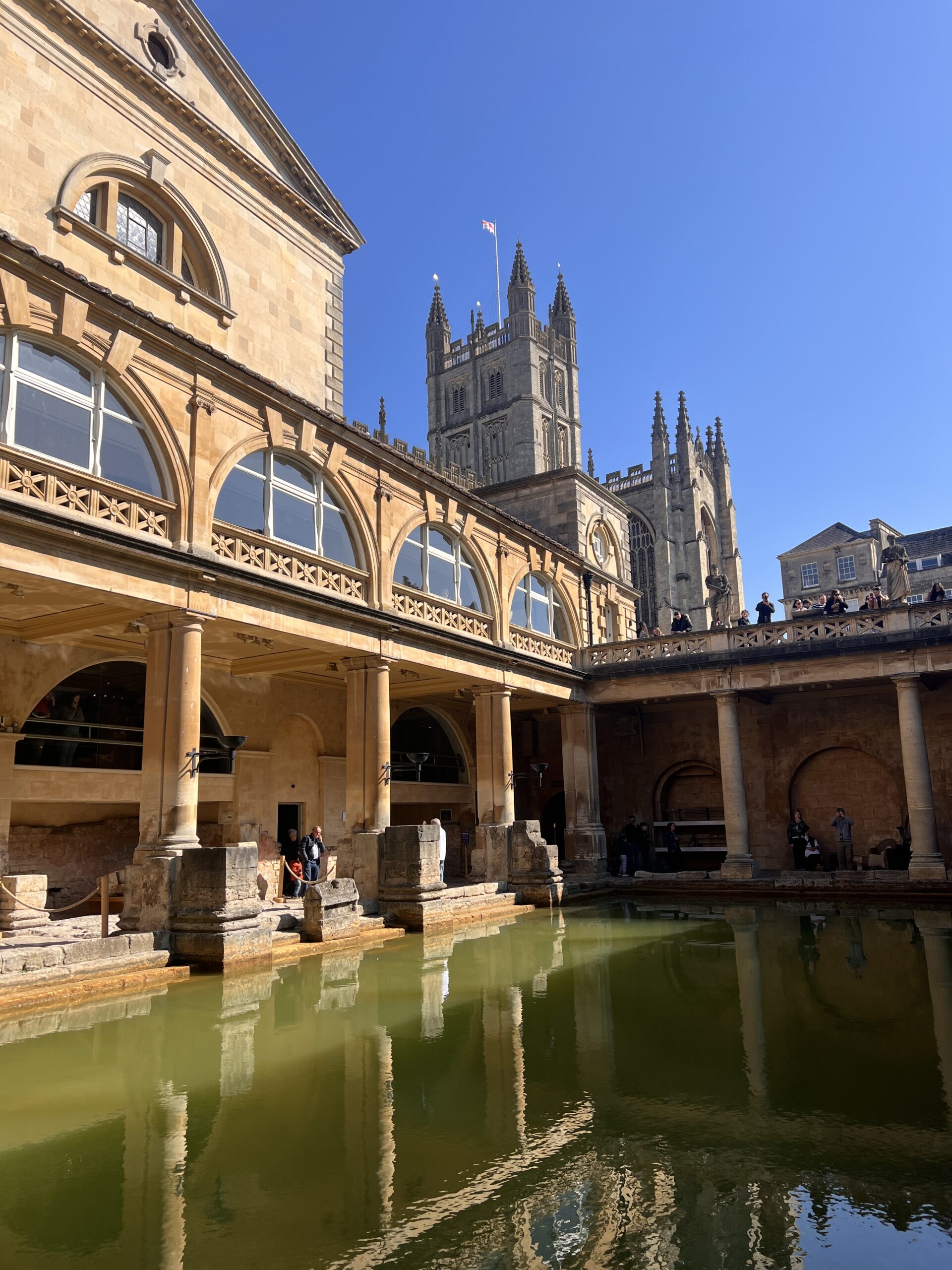
This is the reason Bath exists, and it should be at the top of your list when visiting. The Roman Baths complex is one of the best-preserved Roman sites in the world, built around 70 AD, the Sacred Spring still bubbles up at 115°F / 46°C today, just as it did when Romans first discovered it. Walking through the site, you’ll pass the famous Great Bath (a large lead-lined pool with eerily green, steaming water), the remains of heated changing rooms, plunge pools, and the original pipe system that routed hot mineral water through the complex.
The on-site museum is really lovely. Highlights include the gilt bronze head of the goddess Sulis Minerva, one of the great treasures of Roman Britain, and a collection of curse tablets: small lead sheets where Romans inscribed grievances against neighbors, thieves, and rivals, then threw them into the sacred spring for the goddess to sort out. Apparently, human pettiness is a universal experience, even in Ancient Rome.
An audio guide is included with your admission and it’s worth using. If you want more depth, guided tours run daily at 10am, 11am, 1pm, 2pm, and 3pm and cost £8 per person on top of entry. They cap at 16 people and book out fast, so pre-book.
Before you leave, try a glass of the mineral-rich spa water from the original fountain. We are going to be upfront: it tastes like warm pennies. But it’s one of those things you just have to do, so be sure to have your camera ready to capture your face. Mark’s reaction, and I quote, “not good”.
Travel Tip: Don’t arrive without a pre-booked ticket in spring/summer months. The line for walk-up tickets can eat 45 minutes of your day, and you’ll pay £2 more.
- Cost: £22 – £29 (Depending on day of the week + age)
- More Information: Roman Baths
- Time Needed: 2-3 hours
Bath Abbey
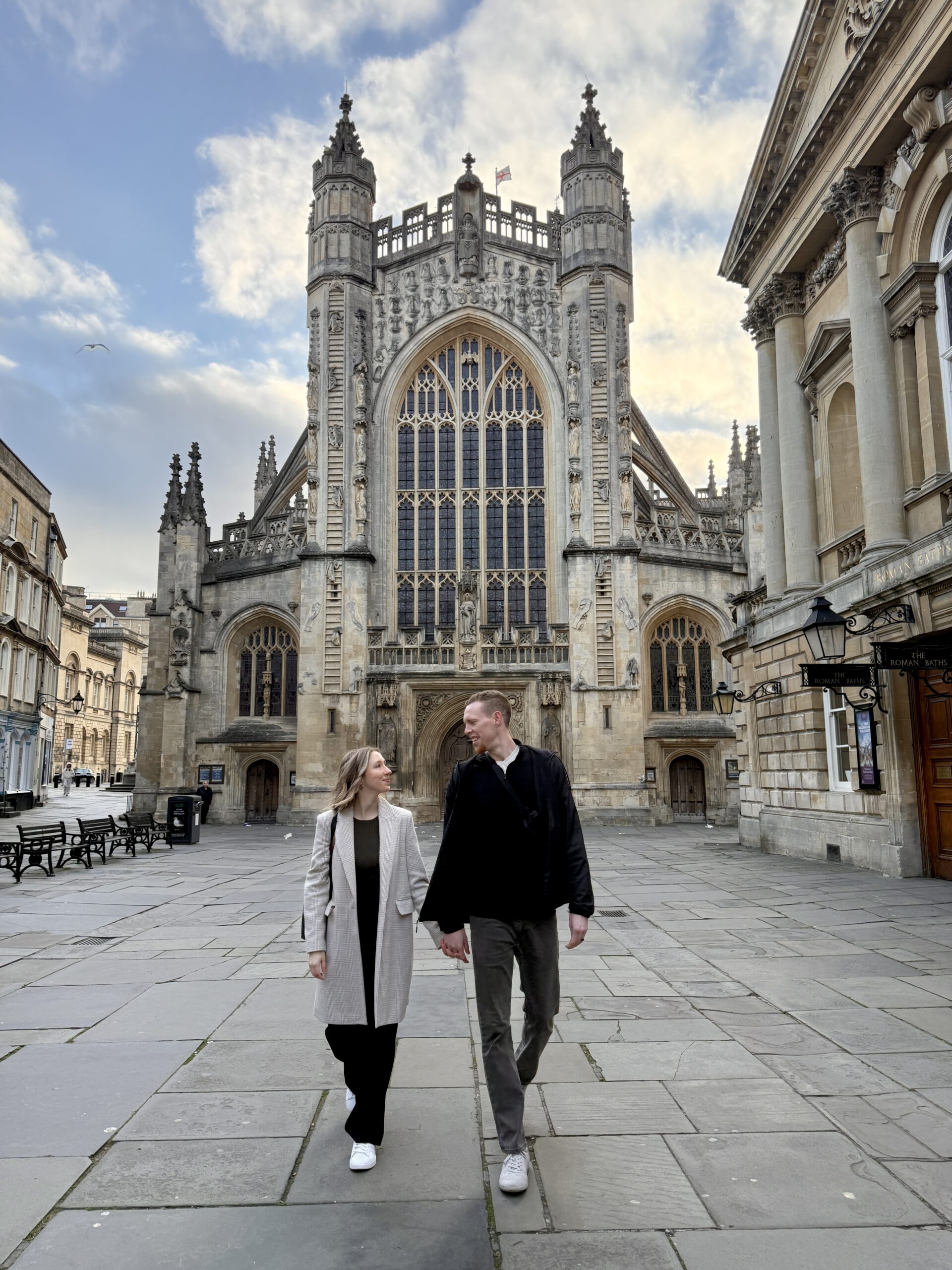
Right next door to the Roman Baths, Bath Abbey has been a place of worship on this site for around 1,500 years. The current building dates primarily from the 16th century with a major Victorian restoration in 1860. Inside, the soaring ceilings and multi-story stained-glass windows are striking.
We opted to skip the Tower Tour due to my fear of heights, but it’s worth considering. You climb 212 steps up a narrow spiral staircase, pass through the bell-ringing chamber, and find yourself behind the clock face before emerging onto the rooftop with panoramic views across the whole city. You can see the Roman Baths directly below, the Royal Crescent, and the hills beyond. Tours take under an hour and must be pre-booked.
Travel Tip: if you’re not doing the Tower Tour, the Abbey interior is lovely but a relatively brief stop, 20 minutes is enough!
- Cost: Free Entry (Tower Tickets £10–12)
- More Information: Bath Abbey
- Time Needed: 15 minutes – 1 hour
Afternoon Tea at the Pump Room
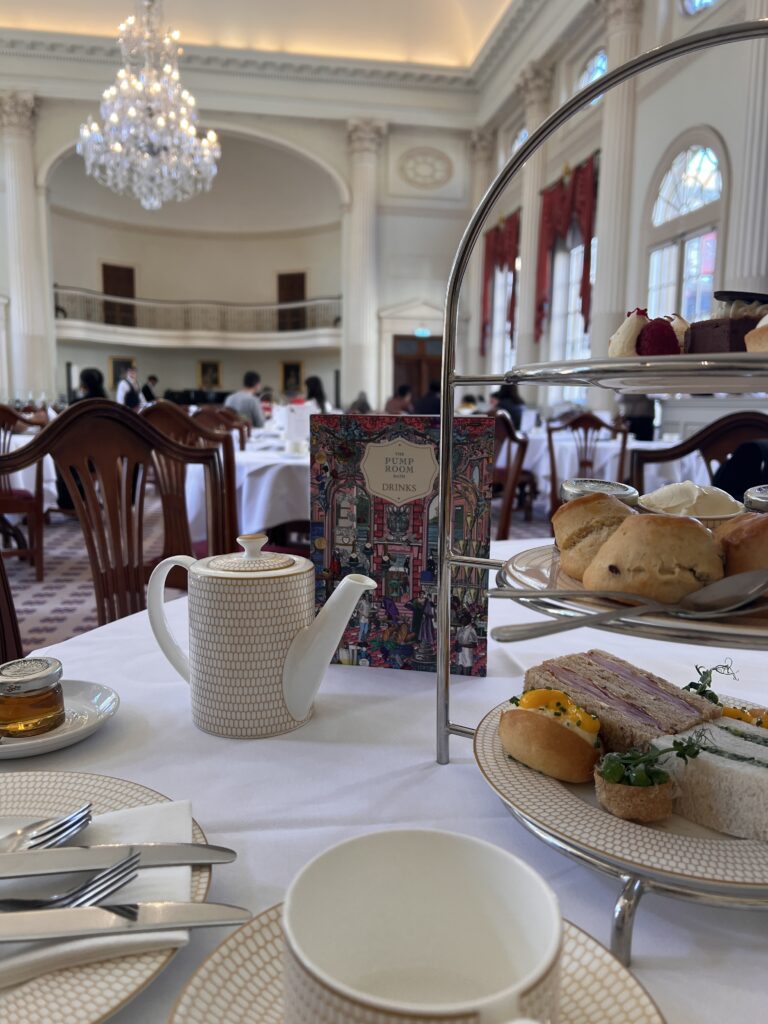
The Pump Room was where Bath’s fashionable visitors gathered to see and be seen, drink the supposedly curative spa water, and conduct the social maneuvering that Jane Austen documents in her novels. Austen wrote about the Pump Room repeatedly in her letters and used it as a setting in both Northanger Abbey and Persuasion. The room looks today more or less as it did in her time: high ceilings, tall windows, and a resident pianist or the Pump Room Trio playing live classical music throughout the day.
Afternoon tea here includes finger sandwiches, scones with clotted cream and jam, and a tier of cakes. The experience is as much about the setting as the food. We loved this afternoon tea and the Pump Room probably takes our top 3 (of all time) tea experiences!
We told them that we were celebrating my Mom’s birthday on the reservation and the pianist played happy birthday while they brought her a cupcake with a candle in it. It was such a sweet moment and made our experience even more special.
Afternoon tea runs approximately £35–45 per person, with occasional themed menus. This was a highlight of our time in Bath, so don’t miss out! You’ll want to make reseravtions in advance, especially on weekends and in peak season to ensure you get a table.
Read about our full experience here: The Best Afternoon Tea in Bath: Our Pump Room Review.
- Cost: £35–45
- More Information: The Pump Room
- Time Needed: 2 hours
The Bath Lookout

The best free thing you can do in Bath is climb to Alexandra Park, about a mile south of the city center. The viewpoint is located in the park and looks out over the whole city below. You can pick out the Abbey, the Circus, the Royal Crescent, and the rolling hills beyond. It’s the kind of view that puts the whole city in context after a day of walking its streets.
The quickest route from the center is Jacob’s Ladder, a long flight of steep stone steps accessed from Carlton Road. Wear comfortable shoes! The climb is genuinely steep in sections, and we won’t pretend otherwise, but the whole thing takes about 15–20 minutes to just get up the hill. Alternatively, you can drive up to the park. It has a café, benches, a children’s playground, and is lovely for a picnic at sunset.
- Cost: Free
- Time Needed: 1 hour
Royal Crescent
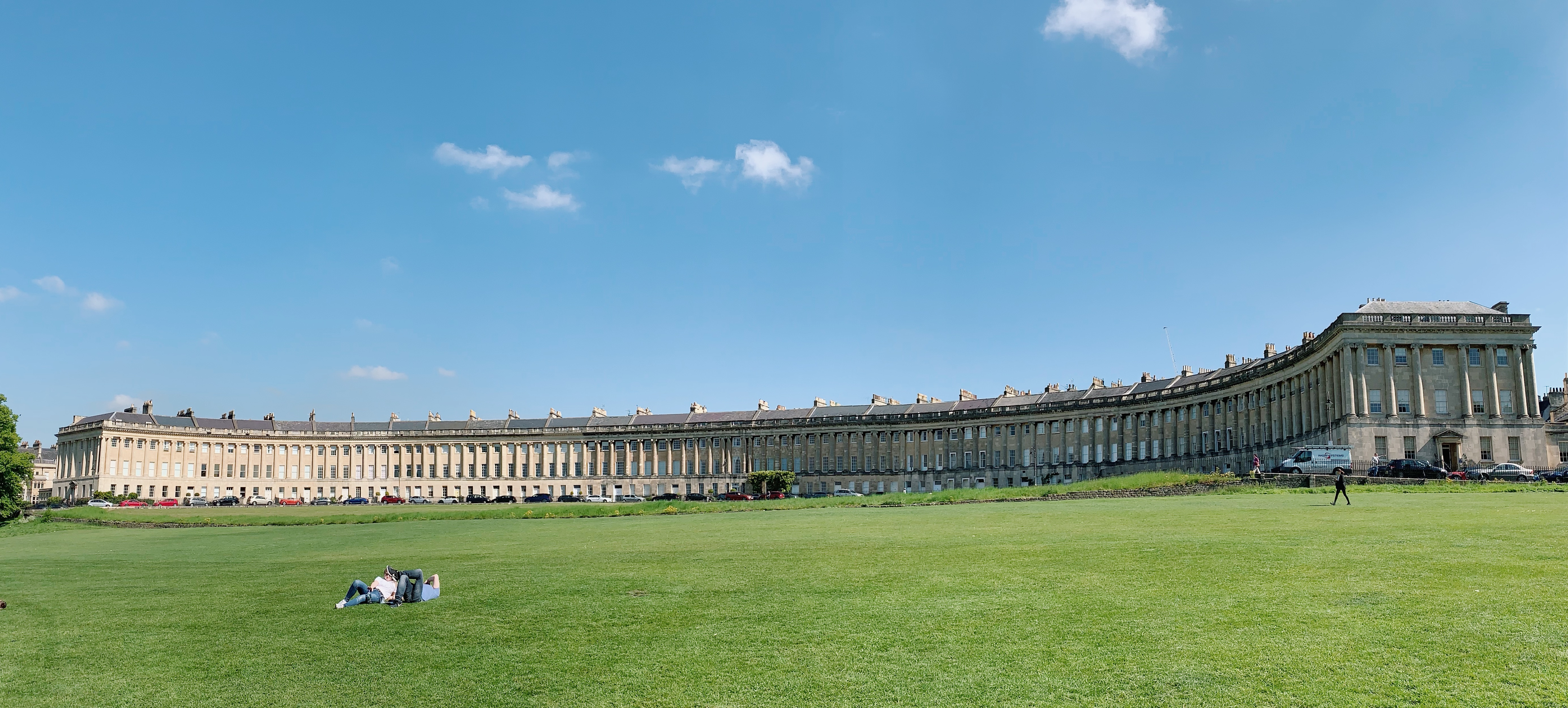
John Wood built the famous Royal Crescent between 1767 and 1775. It’s made up of 30 terraced houses laid out in a sweeping curve overlooking Royal Victoria Park, all Grade I listed, all still breathtaking.
No.1 Royal Crescent is a museum showing how Bath’s fashionable residents actually lived in the late 1700s. Both the upstairs family rooms and the downstairs working quarters. It’s a compact but a well-done visit for any history enthusiast.
Bridgerton connection: The Royal Crescent appears throughout Brigerton seasons. It’s mostly used for scene-setting shots and countless promenade scenes. No.1 specifically serves as the exterior of the Featherington family home. If you’ve watched the show, you’ll recognize it immediately!
- Cost: Free Entry (No.1 Royal Crescent Museum £16)
- More Information: No. 1 Royal Crescent
- Time Needed: 15 minutes – 1 hour
The Circus
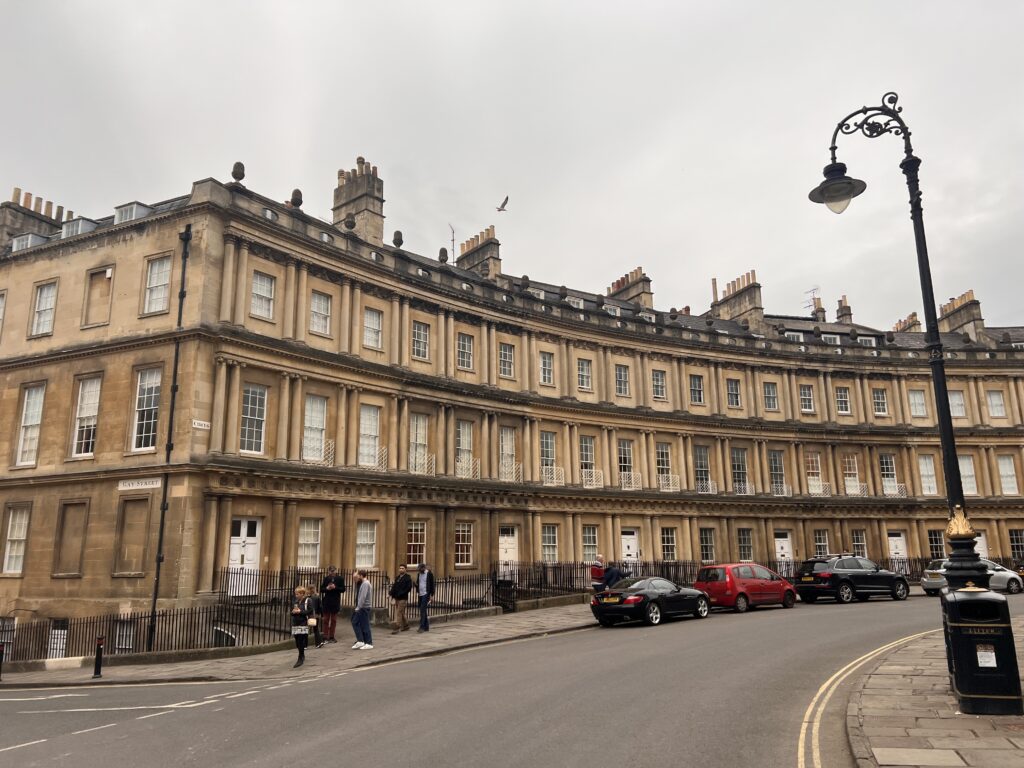
A five-minute walk from the Royal Crescent, the Circus is something John Wood also designed but didn’t live to see finished (his son completed it). It’s a perfect circle of 30 terraced houses, with layered columns on the facade following the three classical orders from bottom to top: Doric, Ionic, Corinthian. Three large trees grow in the central island. Standing in the middle of it and looking around is one of those genuinely disorienting architectural experiences. It sounds nerdy, but we thought this spot was so fascinating!
- Cost: Free
- Time Needed: 15 minutes
Jane Austen Centre
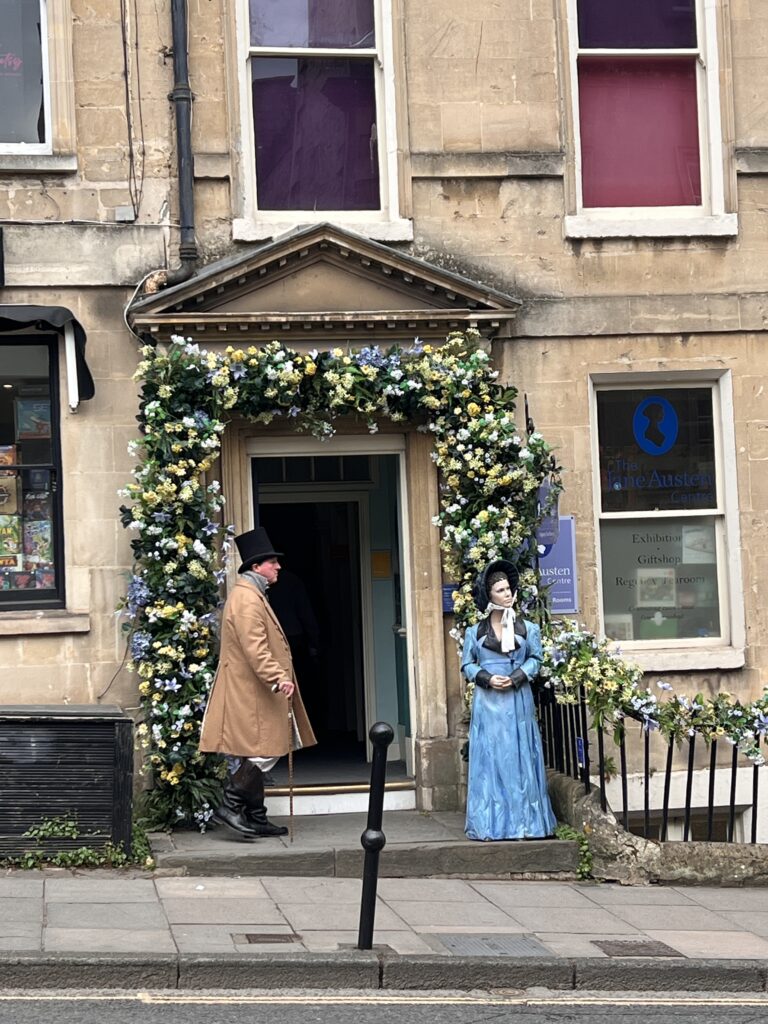
Set in a Georgian townhouse on Gay Street, where Austen herself lived in 1805, this is a livelier museum than its subject matter might suggest. While we haven’t visited personally, our research shows your visit starts with a 20-minute introductory talk delivered in character by an actor in full Regency dress. After that, you’re free to explore at your own pace. The exhibition covers Austen’s years in Bath, her family, the social world she lived in, film costumes from various screen adaptations, and the influence Bath had on her writing.
The centerpiece exhibit is a waxwork of Jane Austen herself (the first lifelike portrayal ever attempted). It was built over three years by a team that used eyewitness accounts and a sketch by her sister Cassandra. There’s also a dress-up section with Regency bonnets, top hats, and fans to get into the time period. Upstairs, the Regency Tea Room offers afternoon tea with Mr. Darcy, running around £25–35 per person.
Travel Tip: The annual Jane Austen Festival runs in September and draws over 5,000 visitors, including a Guinness World Record costumed promenade of 900+ people in Regency dress. If that sounds like your kind of thing, plan your trip to Bath accordingly!
- Cost: £18
- More Information: Jane Austen Centre
- Time Needed: 1-2 hours
The Holburne Museum
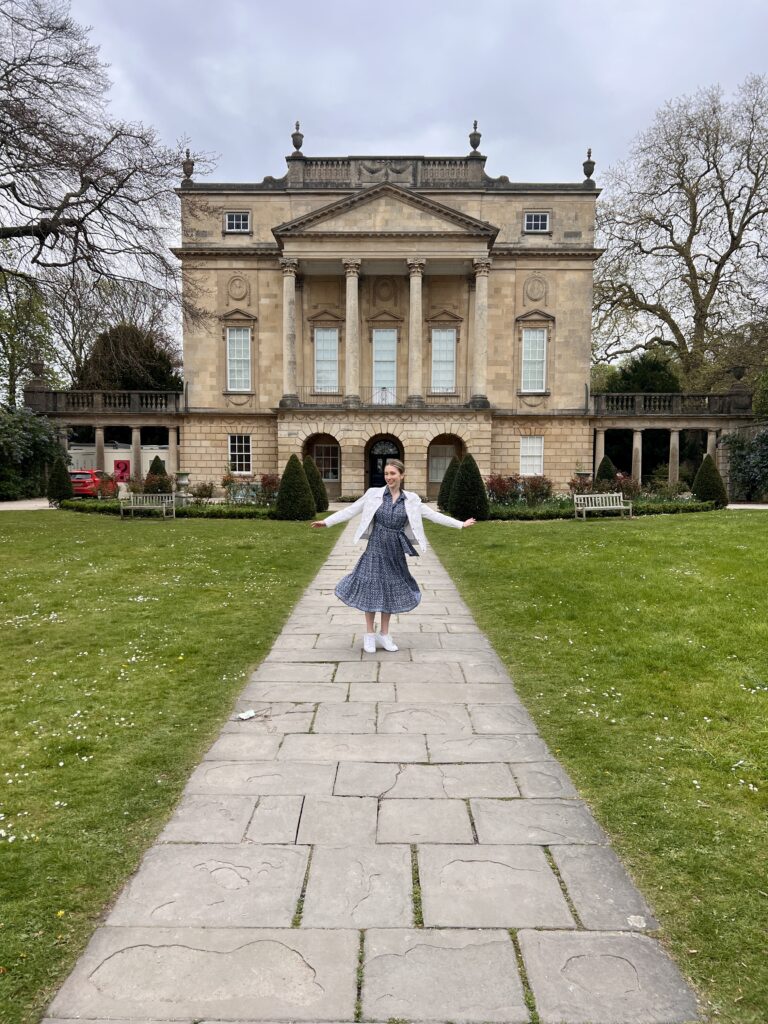
The Holburne was Bath’s first public art gallery! The permanent collection includes paintings by Gainsborough, Stubbs, Zoffany, and Ramsay alongside Renaissance treasures, Dutch Golden Age works, and a former ballroom laid out with silver and china under a crystal chandelier. It’s a proper art museum that is manageable to explore in an hour or two.
The Garden Café opens onto the historic Sydney Gardens, which is a lovely spot for lunch or coffee, and the café and gardens are free to visit whether or not you’re going into the museum. If you’re watching the budget, Wednesday afternoon there is free admission (3–5pm)! We opted to skip entering the museum on our trip, but enjoyed a walk around the building & gardens.
Bridgerton connection: The Holburne’s exterior serves as Lady Danbury’s grand residence throughout the series, appearing in multiple seasons. The audio guide for the museum is voiced by Adjoa Andoh, the actress who plays Lady Danbury!
- Cost: £16.50 (Free every Wednesday 3-5pm)
- More Information: The Holburne Museum
- Time Needed: 1-2 hours
The Parade Gardens
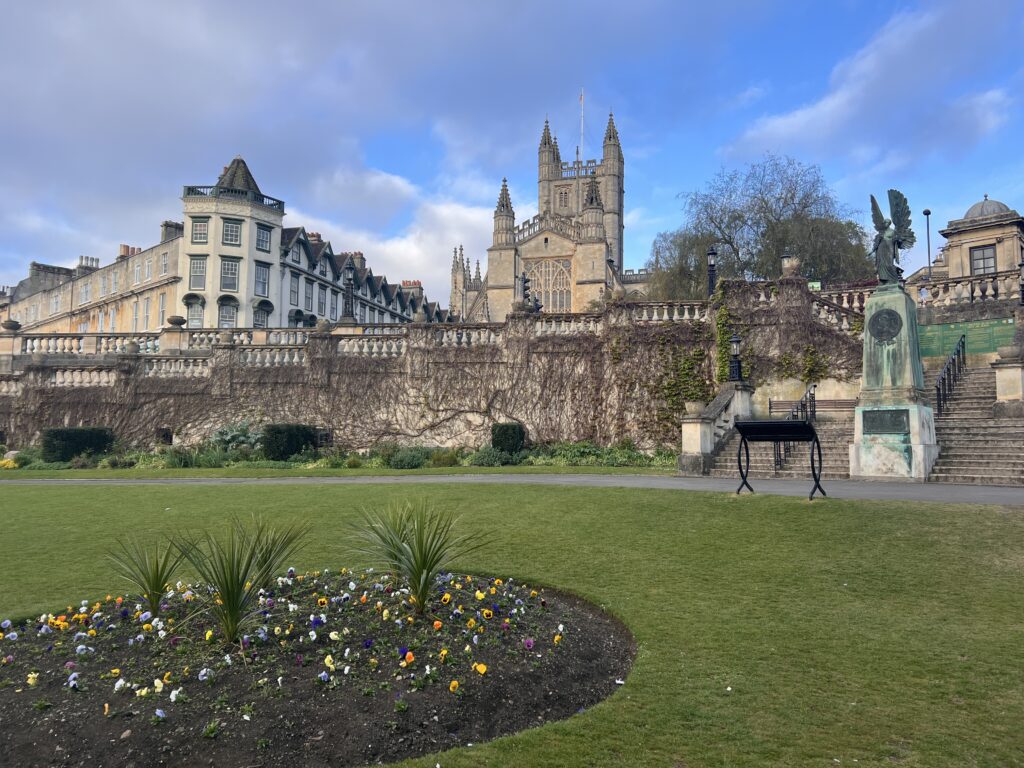
Behind Bath Abbey, you’ll find the Parade Gardens. If you’re tired of hearing me write about John Wood, we’re not done with him yet. He played a part in turning these gardens into the triangular shape we see today. Often overlooked by visitors exploring the city center, it’s a great place to slow down and take a stroll. There are also great views of the river from here!
- Cost: Free
- Time Needed: 15-30 minutes
Day Trip to Lacock
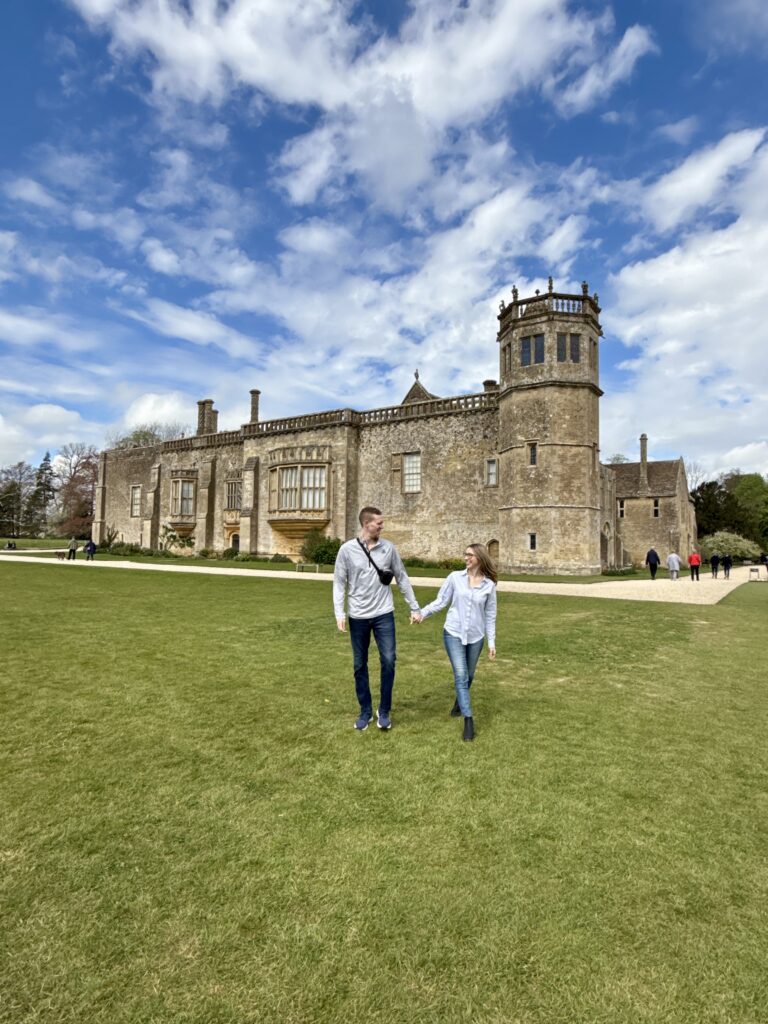
Lacock (pronounced “lay-cock”) is a medieval village about 30 minutes from Bath that the National Trust has owned since 1944, which explains why it looks almost exactly as it did centuries ago. The village has been a filming location for so many productions that recognizing it becomes a game: Pride and Prejudice (1995), Harry Potter (1st & 2nd films), Downton Abbey, The Other Boleyn Girl, War Horse, and more.
You can walk the village for free. Entry to the Abbey, its museum, and the grounds costs approximately £14, but is worth it if you have the time.
Getting there without a car is doable but a bit challenging (train to Chippenham and then a local bus). It’s much easier with a car and you can use the lot by the Abbey. Steal our perfect itinerary here: One Day in Lacock England: The Perfect Visit to a Storybook Village.
Travel Tip: If you’re looking for a cozy meal in Lacock, we recommend the Red Lion. It’s perfect for a pint or a quick bite!
- Cost: £14 for Lacock Abbey
- More Information: Lacock Abbey
- Time Needed: 1/2 – Full Day
Bridgerton Filming Locations in Bath
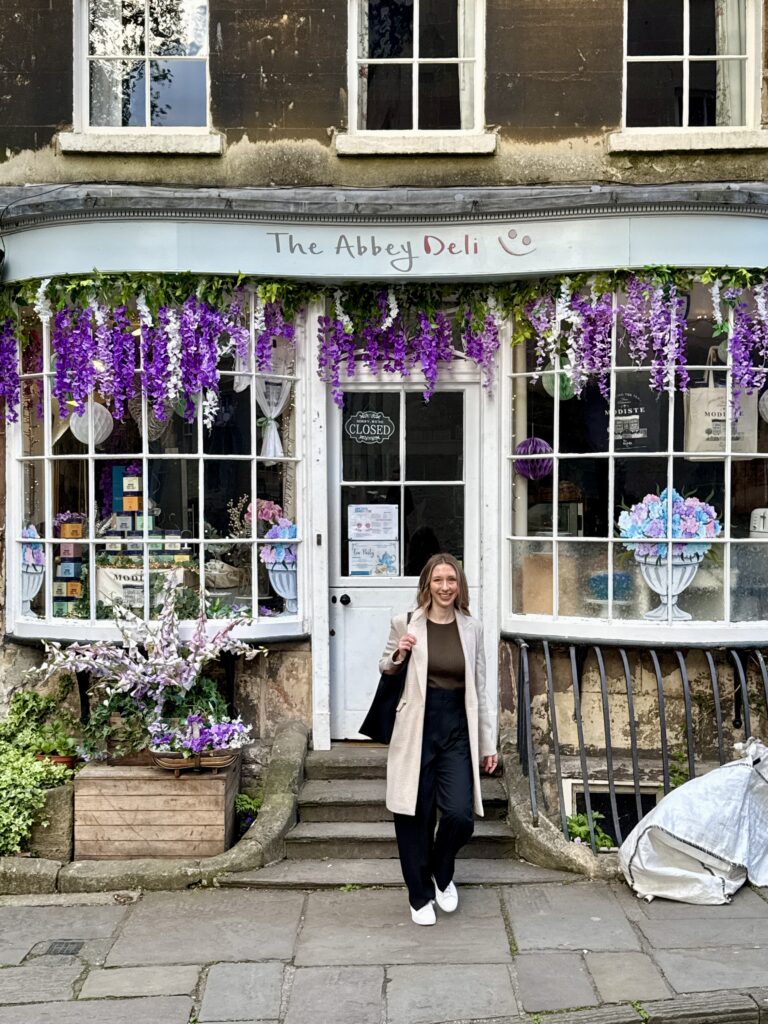
Bath stood in for 18th-century London across multiple seasons of Bridgerton. Bath’s Georgian architecture is largely intact and the streets are narrow enough that modern elements can be shot around, so it makes for the perfect location. Here’s a quick list of the key spots, most of which you’ll pass naturally as you walk the city:
- Royal Crescent: Promenade scenes, carriage arrivals, and the Featherington home exterior (No.1)
- The Holburne Museum: Lady Danbury’s grand residence throughout the series
- Abbey Green: Used as a London street market
- Abbey Deli: the Modiste (dressmakers’ shop)
- Bath Street: This colonnaded Georgian street doubles as Mayfair
- Beauford Square: Street scenes across multiple seasons
- The Assembly Rooms: Ballroom scenes across the series
Visit Bath publishes a free self-guided Bridgerton walking tour covering nine city center locations, all walkable within about 35 minutes. If you’re looking to experience these spots with a guide, you may want to consider this 2-hour Bridgerton walking tour*. We opted to discover a lot of these places by ourselves but imagine a local would have more colorful stories regarding the filming of the show!
Our 3-Day Itinerary for Bath
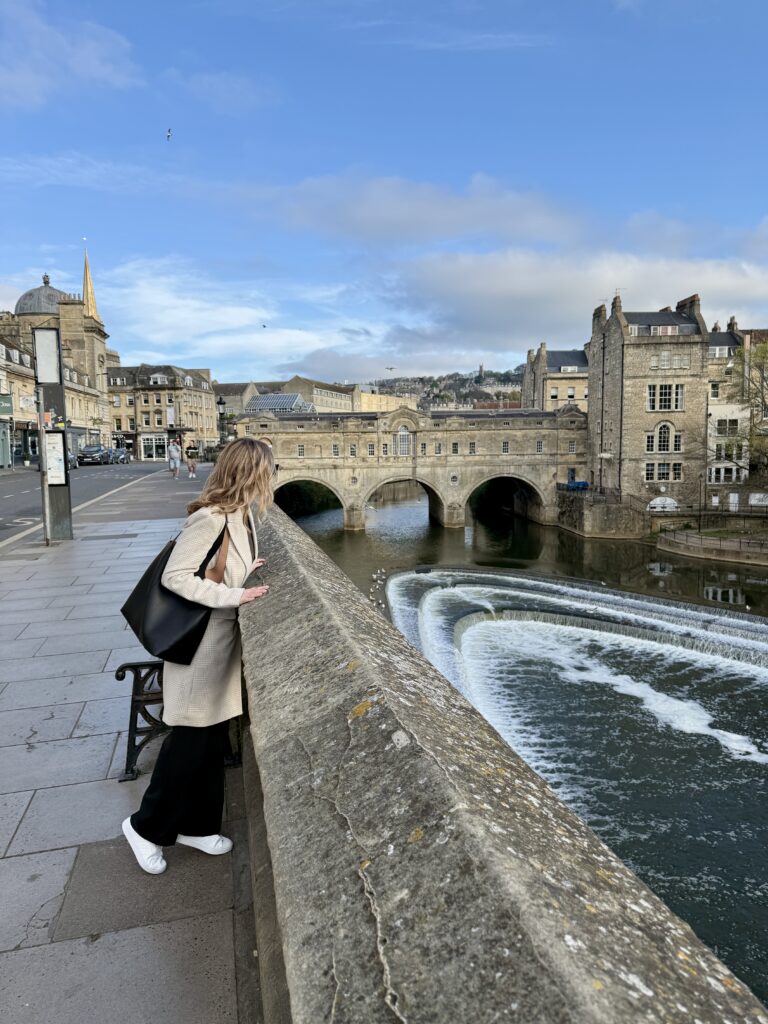
We spent 3 days in Bath and felt like we truly got to know the city. Many people tend to opt for a day trip from London, which is doable but can feel rushed. Like. we said before, Bath is a place that surprises a lot of people how much they love it. If you do have limited time, we recommend checking out our One Day in Bath post for the perfect itinerary!
Day 1: Ancient Bath
Start at the Roman Baths right when it opens. Spend two to three hours inside, including the museum. Cross Abbey Church Yard directly to Bath Abbey. If you pre-booked the Tower Tour, do it before the afternoon sun hits the west face. Afternoon tea at the Pump Room sits conveniently in the same block and is the logical stop for a midday meal. Spend the late afternoon on foot through the lower city: Abbey Green, along Bath Street, over Pulteney Bridge with its lined shops, and down Great Pulteney Street toward the Holburne. If you have time, pop into the museum or enjoy a coffee in the gardens behind the museum!
Day 2: Georgian Architecture & Literary Bath
Get up to the Royal Crescent early: the morning light on the stone is worth it and the tour groups haven’t arrived yet. Visit No.1 Royal Crescent Museum, then walk Brock Street down to the Circus. From there it’s a short walk to the Jane Austen Centre. After lunch, walk the length of Great Pulteney Street. In the late afternoon: climb to the Bath Lookout at Alexandra Park for views at golden hour.
Day 3: Lacock Day Trip
Head out to Lacock by 9:30 and visit the Abbey when it opens at 10:00am. Enjoy lunch in a cozy pub and then take a lap around the picturesque village. You should be back in Bath by mid-late afternoon, giving you time to return to any favorite spots, do some last minute shopping or just enjoy a point at the pub!
What We’d Skip (or do differently)
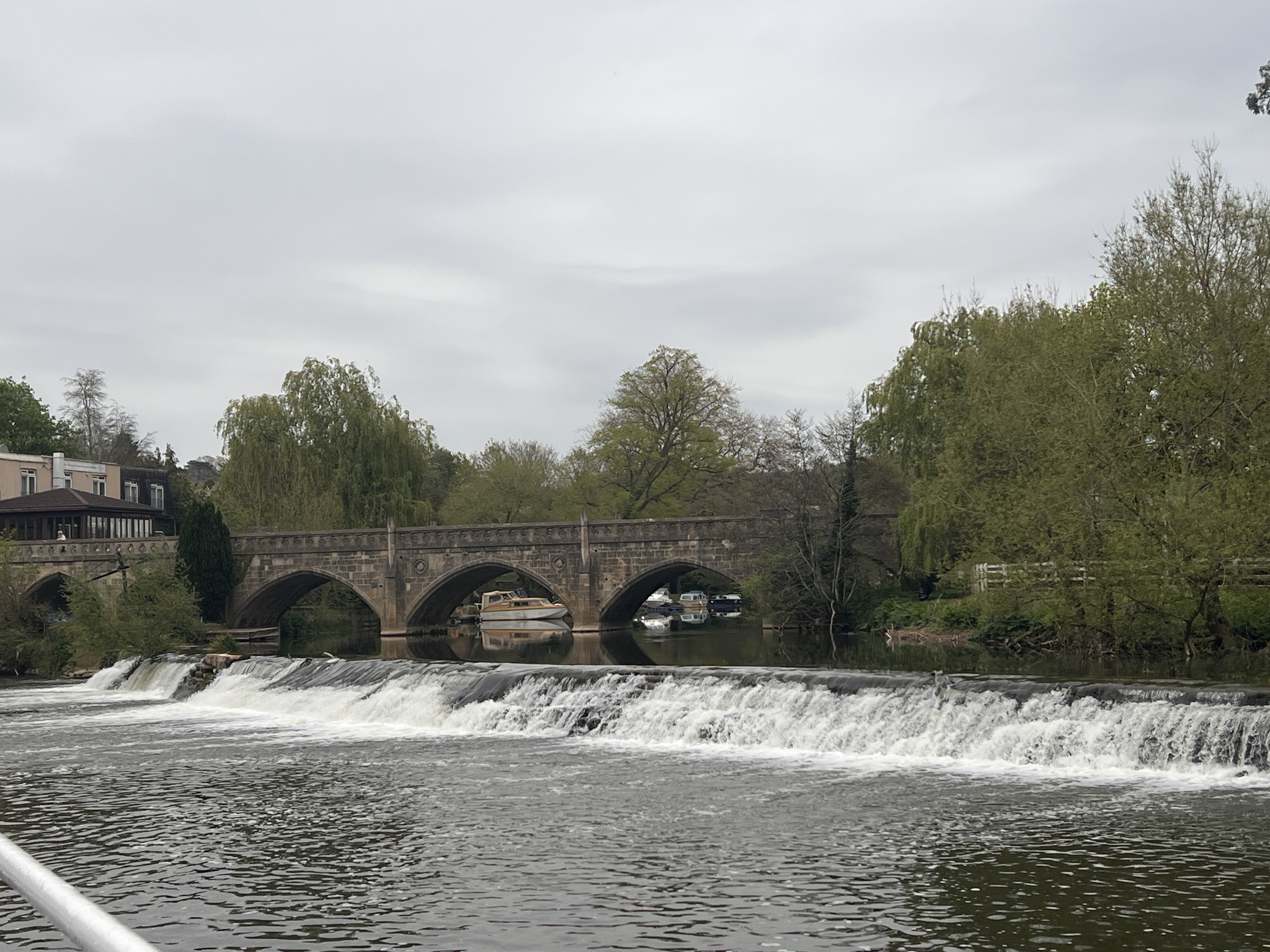
We had a great trip to Bath, but not everything there is worth your time. The river boat tour was a big miss. It’s marketed as a scenic cruise along the Avon, and we get why it sounds appealing on paper. In practice, the stretch of river visible from Bath is not its most scenic. You’re largely looking at the backs of buildings and stretches of water. We’d skip it and use that hour and money elsewhere.
We also skipped both the Jane Austen Centre and the Holburne Museum on this particular trip, and honestly, we didn’t regret it. That’s not a knock on either, but Bath’s streets, crescents, and squares are so beautiful that we kept finding ourselves choosing another hour of wandering over a museum. The city itself is the exhibit. If you’re a dedicated Austen reader or a serious art fan, both are worthwhile, and if you’re more of a stroll-and-soak-it-in traveler, you might feel the same way we did.
Where to Stay
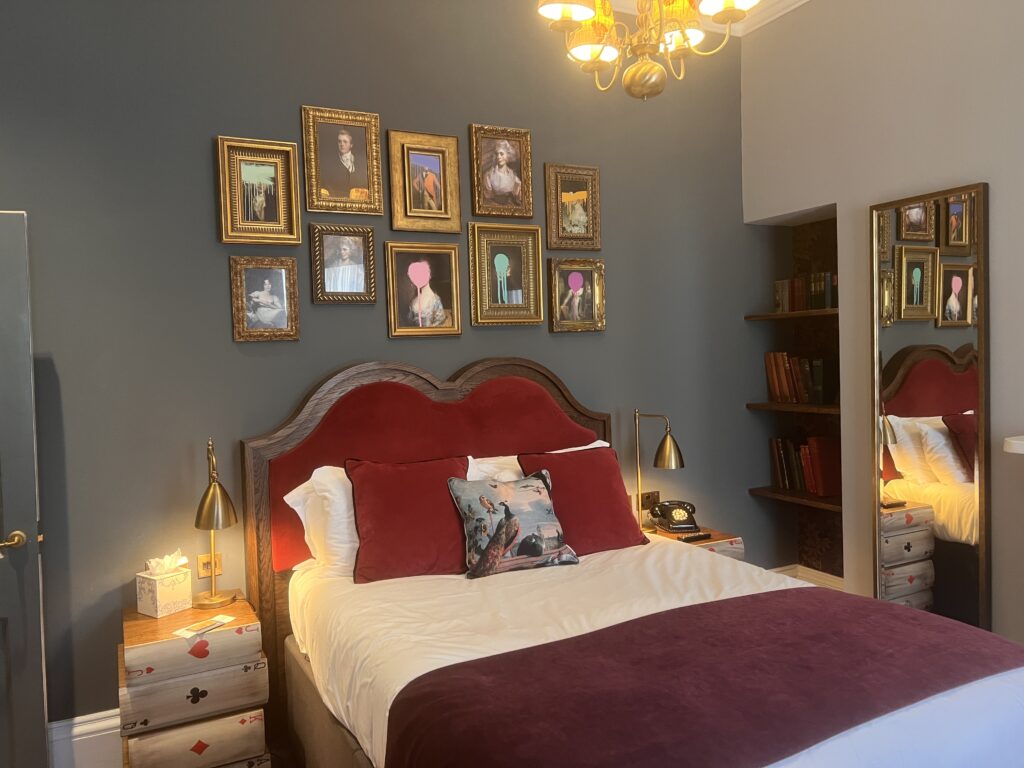
Hotel Indigo Bath is our top pick for where to stay in Bath, and it’s one of those rare cases where the hotel is part of the experience rather than just a place to sleep. The building is a row of Georgian townhouses on South Parade. The hotel opened in 2020 after a multi-year restoration, and the design leans into Bath’s history throughout. Room themes include “Literary Hideaway,” “Romance & Mischief” and “Architectural Beauty.” All 154 rooms have Hypnos beds with Egyptian cotton linen, Nespresso machines, a stocked minibar included in the rate, and bathrooms that are genuinely good rather than just adequate.
The location is ideal. You are truly a three-minute walk to the city center, five minutes to the Roman Baths and Pulteney Bridge, and right next to Bath Spa train station, which makes arrivals and departures straightforward. It’s also quiet enough to actually sleep.
You can opt to include breakfast in your reservation, which is worth it if you prefer a slow morning before heading out. While there are buffet options, breakfast also includes a hot meal off their menu (picture full english breakfast, avocado toast, omelet, etc.) IHG One Rewards points can be used here, which makes it a strong redemption option if you’re collecting points across IHG properties during a longer UK trip.
Read our full review here: Hotel Indigo Bath Review: A Charming Stay in the Heart of the City.
Where to Eat & Drink
Chequers
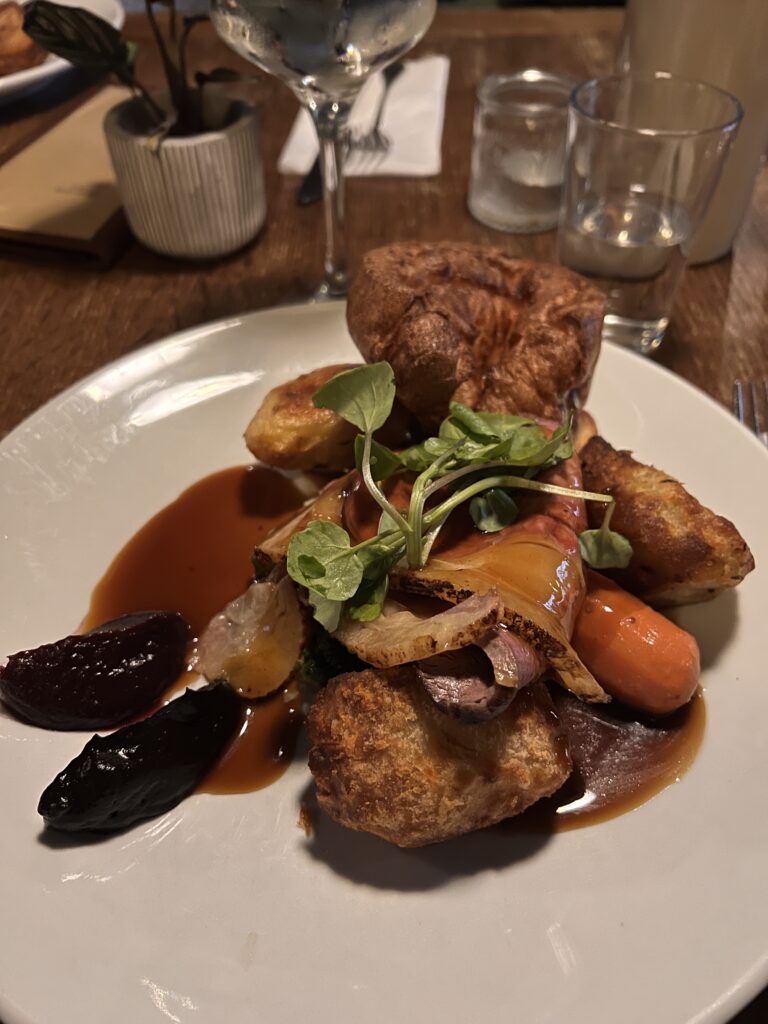
If you’re in Bath on a Sunday, book a table at Chequers. It was probably the best meal of our trip! This beautifully restored gastropub has been serving since 1776, and it’s known for it’s Sunday Roast. The building itself is lovely: a cozy bar downstairs with a fireplace, and a smaller upstairs dining room with views straight into an open kitchen, where you can watch the team plate everything in real time.
The Sunday roast menu offers proper choices (beef, chicken, pork, lamb) and the execution is the kind that makes you understand why the British take this meal so seriously. We’re talking tender meat, proper roasties with actual crisp on them, a rich gravy, and our favorite, Yorkshire pudding. For dessert, do not miss their sticky toffee pudding. (We actively tried to top this throughout the rest of our trip but we all agreed that this was the best!)
Chequers holds a Michelin Bib Gourmand, which is recognition for consistent quality at a reasonable price. The Sunday lunch menu runs all day until 7:30pm. Mains run approximately £16–30. You’ll want to book in advance, especially on a Sunday as it fills up fast!
The Bath Brew House
The Bath Brew House has been brewing its own beers on site since 2013, and it’s become one of the city’s best casual options for an evening out. The pub is relaxed and has a big beer garden with a retractable roof out back. The menu leans into comfort food done well: burgers, fish & chips, Mac & Cheese.
Mains typically run £13–18. It’s not a fine dining destination, but it’s solid for a relaxing evening after a long day on foot, especially with the garden open in the warmer months. Brewery tours run daily at 12pm and 5pm (Sunday–Friday) if you want to go behind the scenes (£10–15/person).
The Pump Room
Like we said before, don’t skip the Afternoon Tea at The Pump Room. The quality of food is top notch when it comes to a traditional tea, and the ambiance is something you can’t beat. We highly recommend reservations. Their tea menu will run you £35–45 per person.
The Huntsman
The Huntsman has occupied the building overlooking Parade Gardens since 1906, and it looks every bit the part. The ground floor is a proper English pub, with wooden floors, a fireplace, handpumps along the bar with a rotating selection of Fuller’s ales and guest beers.
The Ale House
This one is small. The Ale House is one room, a handful of tables, and a bar lined with bottled ales, ciders, and a rotating selection of local cask and craft beers. It’s tucked just off the main road near the Abbey, and was a favorite spot to end our days.
Practical Tips & When to Visit
Best Time to Visit
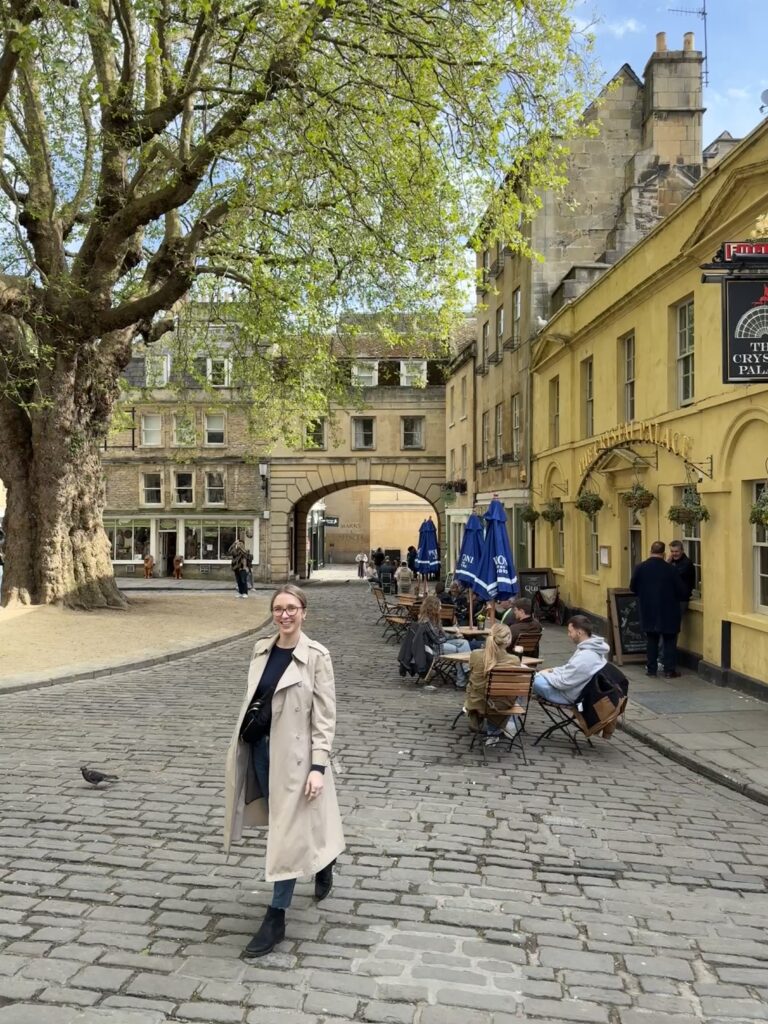
April, May, September, and early October are the sweet spot! The weather is reasonable, the crowds are thinner than July and August, and accommodation prices are noticeably lower. We have a soft spot for April, since that’s when we visited and everything was just starting to bloom!
If you’re looking to travel in the Summer months, we will warn you that air conditioning it not as common in England, but they have recently seen some hotter summers. Don’t forget that June is when they host the Jane Austen festival in Bath, so avoid that month if you’re not an avid fan or prefer less crowds. If you want to visit in the off season, Bath offers a Christmas Market (late November – mid December) with over 200 artisan stalls that may put you in the holiday spirit!
Book in Advance
Some of Bath’s top experiences sell out, particularly in peak season. Don’t leave these to chance:
- Roman Baths: Always book online to guarantee entry and save £2/ticket. The line can take a long time in peak-season.
- Bath Abbey Tower Tour: Since there are capped numbers for the tour group, this one sells out fast.
- Pump Room Afternoon Tea: Walk ins can be challenging or have a wait, so we recommend securing a reservation online.
- Chequers: As one of the more popular Sunday Roast spots in Bath, you don’t want to leave this one to chance!
Tours
Packing List
Bath is a walking city on hilly terrain. Here’s what actually makes the difference:
- Comfortable Walking Shoes: Between the cobblestones and the trek up to the Bath Lookout, your feet will thank you!
- Layers: Bath sits in a valley and the evenings can be cool even in summer, especially if you’re planning to enjoy a beer garden outside.
- Umbrella: This is England, it will rain at some point regardless of the forecast.
- A tote bag: It’s impossible not to accumulate things as you go about your day so it’s handy to have when popping into the local shops!
Who is Bath for?
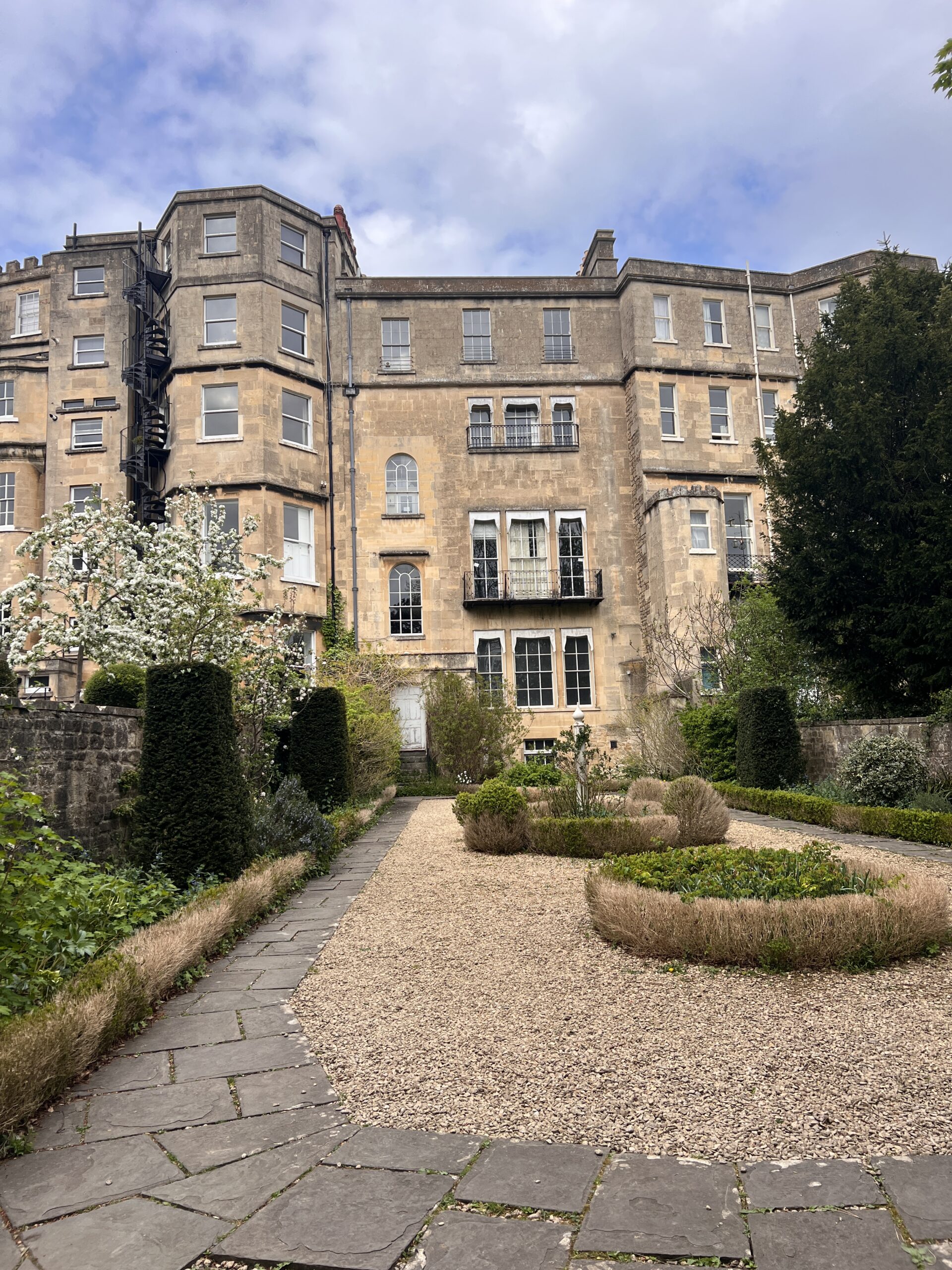
Bath is one of those cities that works for almost everyone, but it hits differently depending on what you’re after. Here’s who we think gets the most out of it:
- History Buffs: You’ll love standing inside a 2,000-year-old Roman bathing complex!
- Bridgerton & period drama fans: This city makes you feel as though you’ve traveled back in time and straight into a Bridgeton episode!
- Architecture lovers: Admire the Royal Crescent, the Cirus and the city that was built from the same honey-colored limestone! There are few cities that look this cohesive in style.
- Slow travelers: This is a city where you can just wander! Enjoy a pint at a pub, admire Bath Abbey from a bench and discover picturesque streets around ever corner.
- Day trippers from London: If you have limited time in England, Bath can be done in a day trip from London. Steal our perfect One Day in Bath itinerary for how to get the most out of your time!
Bath is one of those underrated cities that will quietly steal your heart!
All of the recommendations in our destination guides are places we have personally stayed, dined or explored so you can get an authentic perspective. We will always be transparent if we haven’t personally done something or experienced it firsthand!
Please note: Prices listed in this post are approximate and subject to change. Always check official websites before booking.
Disclosure: Links marked with a * are affiliate links. If you purchase through those links we will receive a small commission. For example, as an Amazon Associate, we earn from qualifying purchases. If you decide to use these links, thank you!